AI Newsletter - March 2026
March 2026 marked a pivotal shift in the AI landscape. While the race for larger models continues, this month was defined by a surge in "agentic" models: smaller, faster, and more efficient architectures designed to power autonomous agents and complex workflows. From OpenAI's new GPT-5.4 variants to specialized hardware from Arm, the infrastructure for the next generation of AI agents is being built.
Here is your monthly round-up of the most significant developments in AI.
Core AI Models & Tech
OpenAI GPT-5.4 mini and nano
OpenAI released GPT-5.4 mini and nano, optimized for high-volume workloads and agentic tasks. These models offer significant speed improvements and competitive performance on benchmarks like SWE-Bench Pro, making them ideal for sub-agent architectures.
Read the announcement →
Mistral Small 4
Mistral introduced Small 4, a 119B parameter model (6B active) that unifies reasoning, coding, and multimodal capabilities. It features configurable "reasoning_effort" and is designed to be a versatile, efficient option for both developers and enterprises.
Read more →
Qwen 3.5 Small Series
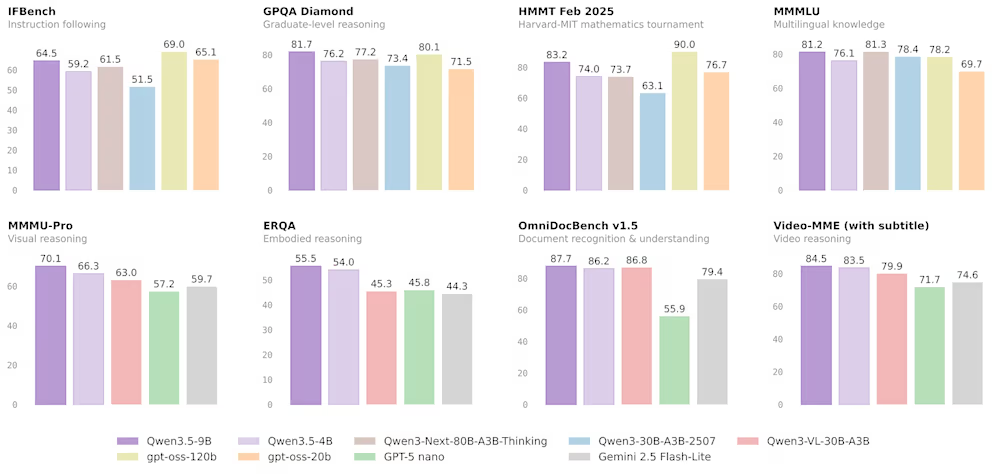
Alibaba's Qwen team released the 3.5 Small Model Series (0.8B to 9B parameters), targeting edge devices and lightweight agents. These models punch above their weight, with the 9B version closing the gap with much larger models.
Read more →
MiniMax M2.7
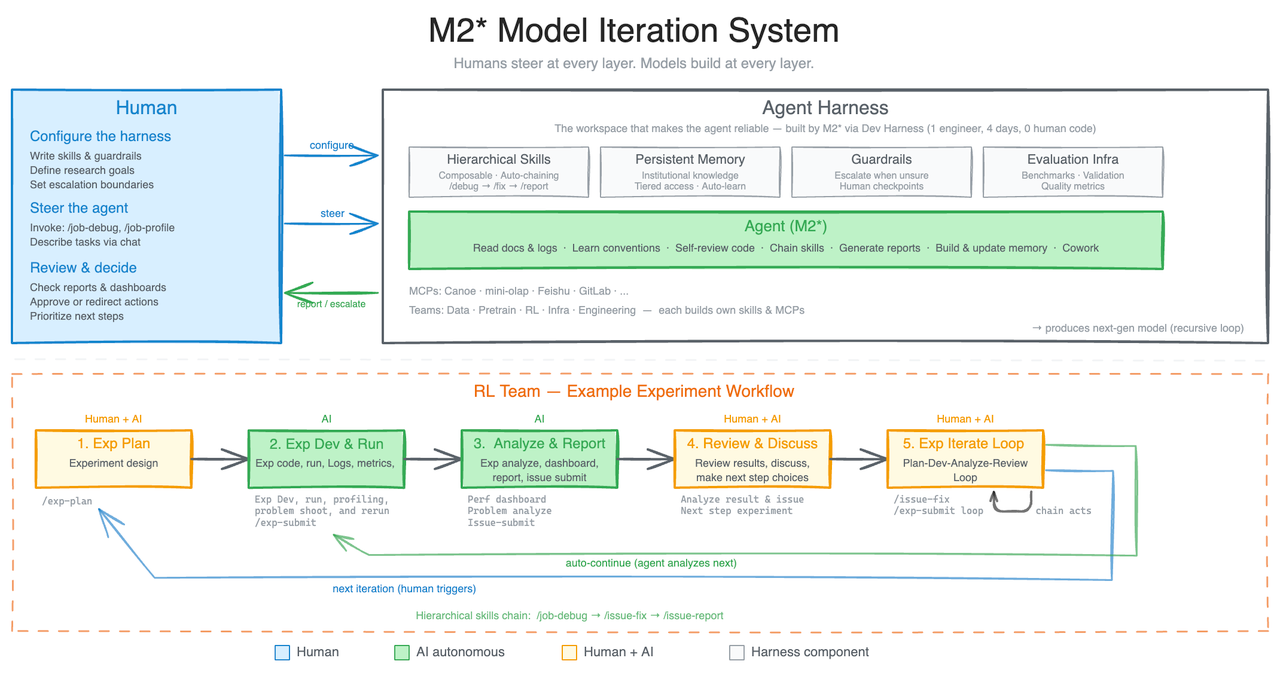
MiniMax released M2.7, highlighting a "self-evolution" capability where the model improves its own training harness. It achieves near-Opus performance on coding benchmarks and is optimized for agentic workflows.
Read more →
Arm AGI CPU
Arm announced its first production silicon for AI infrastructure, the Arm AGI CPU. Designed for "agentic AI," it promises high performance and density for data centers, marking a major shift for Arm into direct silicon production.
Read more →
AI Products & Tools
Cursor Composer 2
Cursor launched Composer 2, powered by a reinforcement-learning enhanced version of Kimi k2.5. It promises "frontier-level" coding intelligence at a competitive price point, with significant improvements in multi-file editing and long-horizon tasks.
Read the blog post →
Mistral Forge
Mistral launched Forge, a platform for enterprises to build and fine-tune models on their own proprietary data. It aims to bridge the gap between generic models and specific organizational needs, offering control and strategic autonomy.
Read more →
Claude Skill-Creator Updates
Anthropic updated its skill-creator tool to help users test, measure, and refine agent skills. The update brings software engineering rigor—like evals and benchmarks—to prompt engineering, enabling better reliability for agentic workflows.
Read more →
Research & Breakthroughs
MiniMax Self-Evolution
MiniMax's M2.7 release showcased an internal "self-evolution" workflow where the model recursively improves its own training harness and agent capabilities. This represents a step towards autonomous AI development cycles.
Read more →
Turmoil at Alibaba's Qwen Team
Lin Junzhao, a core figure behind the Qwen models, departed Alibaba along with other key team members. The exit highlights internal tensions over resources and strategy between the open-source Qwen team and Alibaba's broader AI goals.
Read more →
Real-World Applications
Nvidia GTC 2026
At GTC 2026, Jensen Huang announced $1 trillion in orders for Blackwell and Vera Rubin systems, signaling massive demand for AI infrastructure. He also highlighted real-world adoption of autonomous vehicle tech by Uber and major automakers.
Read more →